
Pressure-Treated Pine Fencing in Houston, TX
Pressure-treated pine is a widely used value-oriented wood fence material that can provide privacy and repairable construction. Preservative treatment helps protect lumber from certain decay and insect threats, while moisture, sun, drainage, installation, and finishing still shape its performance in Houston.
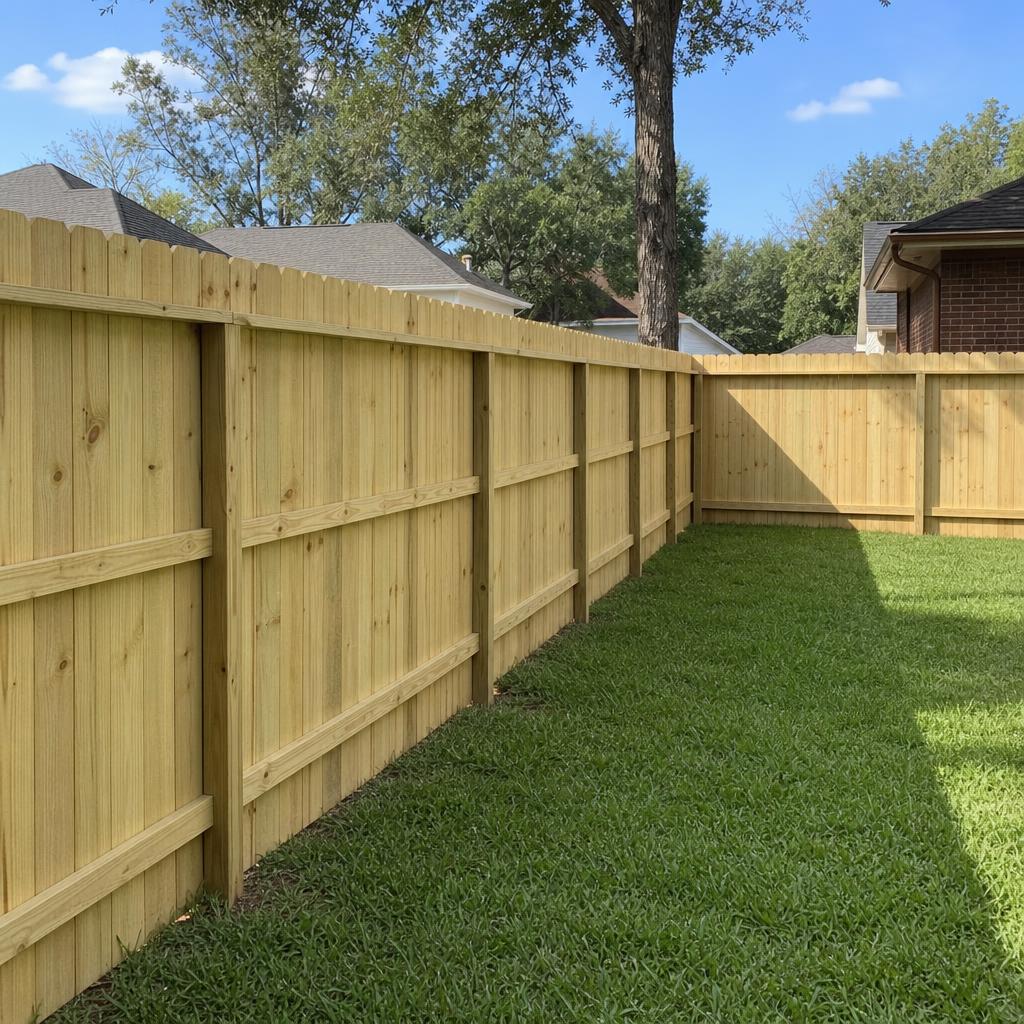
What Is Pressure-Treated Pine Fencing?
Pressure treatment forces preservative chemicals into lumber under controlled conditions; it does not make every board identical or eliminate weathering. Pine is available for pickets, rails, posts, and structural components, with the right grade and treatment depending on where each piece is used. A privacy fence may use vertical pickets, board-on-board overlap, horizontal boards, or a shadowbox layout. The wood can be cut and replaced more readily than some manufactured panels, but color change, checking, shrinking, twisting, and movement are normal considerations for exterior lumber.
Is Pressure-Treated Pine Fencing a Good Fit for Houston?
Houston’s heat, intense sun, humidity, rain, and wet-dry cycles put pressure on wood finishes and joints. Good drainage and appropriate post installation help keep soil contact and standing water from shortening service life. Freshly treated lumber may contain substantial moisture and can change as it dries; that does not mean every board will warp, but spacing and fastening should account for movement. Finishing timing should account for lumber moisture, treatment, manufacturer recommendations, and the selected stain or sealer. Do not assume one calendar applies to every load or product.
Advantages of Pressure-Treated Pine Fencing
Things to Consider
Pressure-Treated Pine vs Cedar vs Composite
| Factor | Pressure-treated pine | Cedar | Composite |
|---|---|---|---|
| Initial positioning | Often value-oriented | Often higher-cost natural wood | Often higher initial investment |
| Appearance | Wood grain; can be stained | Distinct natural grain and color | Manufactured wood-look options |
| Maintenance | Cleaning and finish care vary by exposure | Cleaning and finish care vary by exposure | Usually no recurring stain, paint, or seal; follow product guidance |
| Privacy | Many solid and semi-solid layouts | Many solid and semi-solid layouts | Many full-panel systems |
| Repairability | Individual boards are often replaceable | Individual boards are often replaceable | Depends on the panel and system |
| Longevity variability | Moisture, treatment, soil, and care are significant | Exposure and care remain significant | Product, installation, UV, and impact remain significant |
Pressure-Treated Pine Fence Styles and Configurations
Choose from privacy pickets, board-on-board overlap, shadowbox, picket fencing, lattice or trim details, and selected horizontal layouts. Discuss picket width, spacing, top treatment, rails, post caps, and gate framing. A solid privacy layout can be useful for screening but also changes wind loading and the amount of material required.
What Affects Pressure-Treated Pine Fence Pricing in Houston?
Pine pricing depends on footage, height, lumber grade and treatment, picket and rail dimensions, post specification, layout, top details, gates, corners, terrain, demolition, access, utilities, fasteners, and finish scope. Board-on-board and custom trims use more labor and material than a basic layout. Soil and post depth, removal, HOA requirements, and difficult access can change installation effort. Use the value category only as a general comparison, not a promised project price.
Pressure-Treated Pine Fence Installation Considerations
The installer should evaluate lumber condition and moisture, establish post layout and footing details, and select rails and fasteners for the exposure. Posts, rails, and pickets need compatible treatment and sound attachment. Allow for normal board movement and avoid applying a finish before the lumber and product instructions permit it. Gates need adequate posts and bracing; the heavier or wider the gate, the more important alignment and hardware selection become.
How Much Maintenance Does Pressure-Treated Pine Fencing Need?
Inspect posts, rails, pickets, fasteners, gates, and areas near soil or sprinklers. Clean surface buildup and address vegetation, drainage, loose boards, and damaged end grain. Finishing timing depends on lumber moisture, treatment, manufacturer recommendations, and the selected stain or sealer; recently treated wood may need time to dry sufficiently. Refinish when the actual surface condition and product directions call for it, rather than relying on a universal two- or three-year promise.
How Long Does Pressure-Treated Pine Fencing Last?
A properly specified and installed treated-pine fence can remain useful for many years, but actual service life varies with treatment, lumber quality, post and soil conditions, drainage, Houston exposure, physical damage, and maintenance. Numeric lifespan ranges should be treated as estimates, not guarantees. Regular inspection and timely replacement of damaged components can extend the useful life of the overall fence.
Who Is Pressure-Treated Pine Fencing Best For?
Pine fits buyers who want wood privacy, flexible construction, repairable boards, and a value-oriented starting point. It is useful where a natural material and the ability to stain or change appearance matter.
When Another Material May Fit Better
Consider vinyl or composite when recurring wood finishing and moisture-related movement are not acceptable. Consider a metal system when open visibility, a decorative gate, or a different security profile matters more than solid privacy.
What Do I Need for a Pressure-Treated Pine Fence Quote?
- Property address, approximate footage, height, grade, and desired privacy level
- Layout: privacy, board-on-board, shadowbox, picket, horizontal, or custom
- Picket, rail, post, cap, hardware, and fastener preferences if known
- Gate count, widths, swing, latch, automation, and reinforcement needs
- Existing fence, removal, access, drainage, utilities, and photos
- Preferred finish, known HOA requirements, and desired installation timeline
Get a pressure-treated pine quote matched to your design
Send footage, privacy style, gate details, photos, and your preferred finish plan so the estimate reflects the wood and installation choices that matter.
Frequently Asked Questions
What does pressure-treated pine mean?
Preservative chemicals are driven into lumber under pressure to help protect specified components from certain decay and insect conditions. Treatment does not eliminate weathering, movement, or the need for proper installation and care.
When can I stain treated pine?
There is no universal date. Finishing timing should account for lumber moisture, treatment, manufacturer recommendations, and the selected stain or sealer. Recently treated wood may need to dry sufficiently before some products adhere.
Does treated pine warp?
Wood can shrink, check, twist, or warp as it exchanges moisture, but that does not mean every board will do so. Lumber condition, grade, fastening, drainage, exposure, and installation details all matter.
Is pine better than cedar?
Neither is universally better. Pine is often selected for value and availability, while cedar may be chosen for its appearance and natural wood characteristics. Compare the complete grade, construction, finish plan, and maintenance expectations.
Does pressure-treated pine resist termites?
Treatment can help protect against certain insects, but performance depends on the treatment and component. It should not be treated as a guarantee against termites; keep soil, moisture, and drainage details in view.
How often does pine need maintenance?
Timing depends on finish, sun, rain, moisture, drainage, and surface condition. Inspect regularly and refinish or repair according to what the fence and product instructions require rather than a fixed calendar.
How long can a pine fence last?
Service life varies with treatment, lumber, posts, soil, drainage, installation, exposure, and maintenance. Published ranges are estimates, not guarantees.
Is pressure-treated pine good for Houston?
It can be a practical Houston choice when the design, posts, drainage, fasteners, and finishing plan address heat, UV, humidity, rain, and normal wood movement.