
Cedar Fencing in Houston, TX
Cedar brings natural color, texture, and flexible privacy designs to Houston properties. Its natural resistance to some decay and insects can be useful, but sun, rain, humidity, soil contact, and finish choices still make wood maintenance and board replacement part of ownership.
What Is Cedar Fencing?
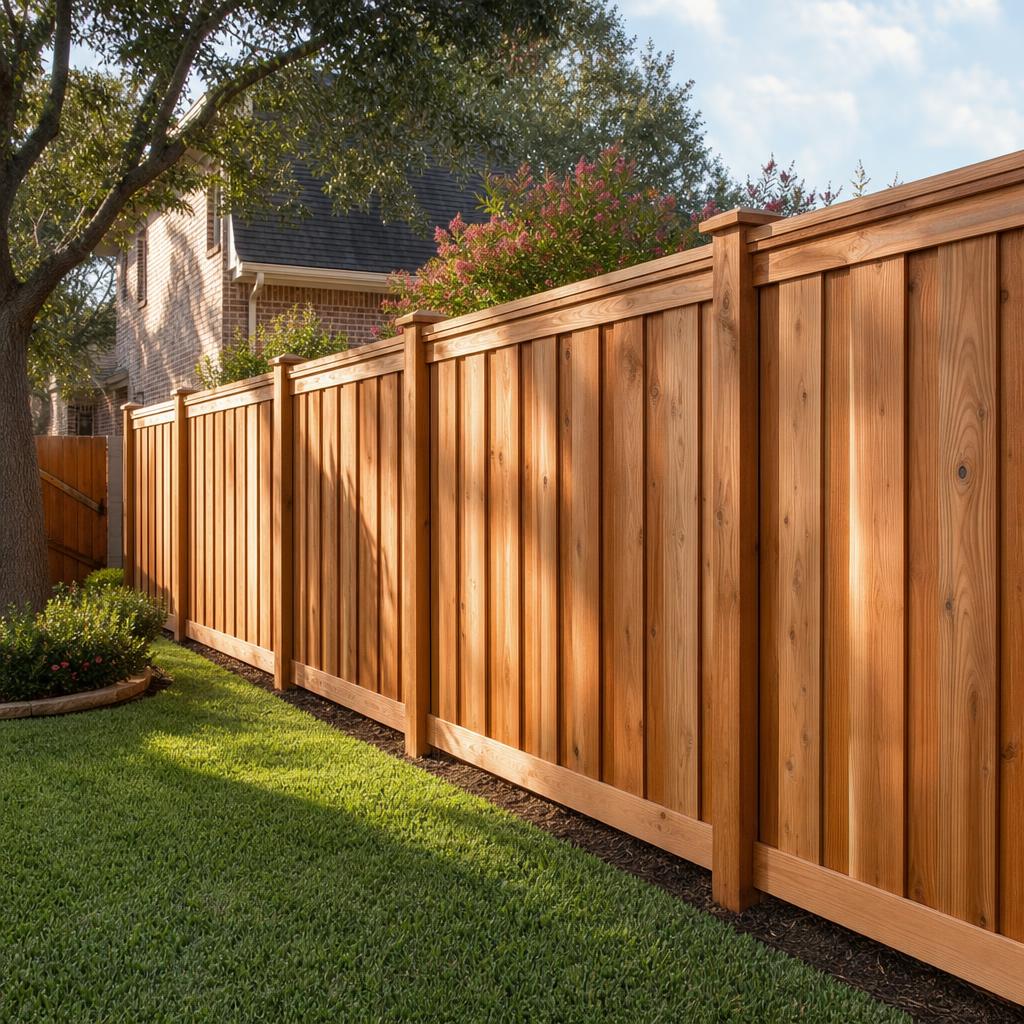
Cedar fencing is commonly built from pickets, rails, posts, and trim, with the wood's grain and natural color doing much of the visual work. Western red cedar and other cedar products differ in color, availability, grade, thickness, and knot content. Clearer, thicker pickets can create a more uniform premium appearance, while knotty grades offer a more rustic character. Cedar is naturally resistant to some decay and insects compared with many untreated woods, but it can still deteriorate or attract pests when exposure and maintenance are unfavorable. A good design keeps end grain and the lower edge from holding unnecessary moisture.
Is Cedar Fencing a Good Fit for Houston?
Houston's long hot season, strong UV exposure, heavy rainfall, and humid periods can accelerate color change and moisture cycling in wood. Sound drainage, a sensible ground clearance, protected end grain, and galvanized or otherwise suitable fasteners help the assembly cope with that environment. A finish can slow gray weathering and reduce water uptake, but the correct timing depends on the wood's condition and the selected product. Soil contact, sprinkler overspray, vines, and poor airflow deserve special attention; they can affect the bottom of a fence sooner than the exposed face.
Advantages of Cedar Fencing
Things to Consider
Cedar vs. Pressure-Treated Pine vs. Composite
| Factor | Cedar | Pressure-Treated Pine | Composite |
|---|---|---|---|
| Appearance | Warm natural grain, with knots and color variation depending on grade. | Natural wood character with treatment-related color changes as boards dry. | Manufactured wood-look consistency; pattern and color depend on the product. |
| Privacy styles | Strong fit for solid, board-on-board, shadowbox, and horizontal designs. | Also supports privacy, but boards may move as moisture content changes. | Often uses engineered boards or panels with defined dimensions. |
| Upfront cost | Typically above value-oriented treated pine when grade and finish are comparable. | Often positioned below premium composite, though style and labor control the result. | Often higher initial material cost than common wood systems. |
| Maintenance | Cleaning, board checks, and finish timing based on exposure and desired appearance. | Finish and moisture inspection plus periodic cleaning. | Usually no recurring staining, but product-specific cleaning and care still apply. |
| Weathering | Can gray and change color as it weathers. | Treated lumber can shrink, check, twist, or change as it dries. | Can experience color change or movement; manufacturer instructions matter. |
| Repairability | Boards and rails can often be replaced or refinished in sections. | Individual wood parts are commonly replaceable with matching stock. | Matching a discontinued profile or color can affect panel replacement. |
Cedar Fence Styles and Configurations
Available configurations depend on the selected product, design, and site conditions.
- Side-by-side pickets for a straightforward screen, or board-on-board construction for fewer direct sightlines.
- Shadowbox layouts that alternate pickets across the rails, balancing screening and airflow.
- Horizontal boards, cap-and-trim tops, lattice accents, dog-ear or flat pickets, and custom gate patterns.
- Grade-appropriate pickets with attention to knot content, thickness, moisture condition, and visible faces.
- Cedar pickets paired with suitable posts and rails, including options for reinforced or metal gate posts.
What Affects Cedar Fence Pricing in Houston?
A useful estimate should identify the product and site conditions rather than rely on a universal price.
- Linear footage, height, picket grade and thickness, board width, spacing, and the selected privacy pattern.
- Post and rail material, cap and trim, lattice, horizontal framing, decorative ends, and finish preparation.
- Gate count, width, height, hardware, reinforcement, automation provisions, and matching walk-through details.
- Removal, roots, narrow access, grade changes, drainage correction, concrete work, and existing-post evaluation.
- Stain or sealer selection, surface preparation, HOA design rules, permit considerations, and the desired schedule.
Cedar Fence Installation Considerations
Installation details should match the selected system, property, and intended use.
- Choose posts, rails, fasteners, and concrete details for a solid privacy wind surface rather than only the picket face.
- Keep wood away from persistent soil or water contact where the design permits, and provide a sensible lower-edge clearance.
- Account for picket moisture condition and expected spacing; wood may change dimensions as it acclimates and dries.
- Use straight, appropriately graded boards on visible faces and place knots, cuts, and end grain thoughtfully.
- Build gates around reinforced posts and correctly sized hinges and latches; do not hang a wide gate from a light post.
- Discuss finish timing after installation: wood condition, moisture, product instructions, and the intended color all matter.
How Much Maintenance Does Cedar Fencing Need?
Inspect cedar for loose fasteners, open joints, cracked or split boards, softened lower edges, vegetation contact, and gate movement. Wash off surface dirt and biological buildup using methods compatible with the wood and finish. Cedar may be left to weather gray or finished to slow color change; maintenance timing depends on finish, exposure, product, and desired appearance rather than a universal calendar. Address damaged boards and water-management issues early, because stain cannot make a compromised post or rail sound.
How Long Does Cedar Fencing Last?
A well-designed cedar fence can provide many years of service, but a single lifespan number would hide important differences in grade, thickness, post material, soil contact, drainage, UV exposure, rainfall, finish care, and storm or impact damage. Posts and rails may age differently from pickets. Periodic board replacement or refinishing can keep a system useful, while persistent moisture at the ground line may require structural work sooner. The installation and maintenance plan are as important as the species name.
Who Is Cedar Fencing Best For?
This material may be a good fit when these priorities match the property and project.
- Homeowners who value natural grain, color, and a privacy fence that can be refinished.
- Backyard and side-yard projects needing solid, board-on-board, shadowbox, or horizontal screening.
- Properties where custom trimming, cap-and-trim details, or coordinated wood gates matter.
- Buyers willing to inspect wood and make finish decisions based on Houston exposure and desired appearance.
When Another Material May Fit Better
Compare alternatives when these priorities are more important.
- Owners seeking a fence with no inspection, finish decisions, or replacement of weathered boards.
- Sites with persistent standing water, unaddressed drainage, or unavoidable wood-to-soil contact.
- Projects where consistent factory color and minimal material movement are more important than natural variation.
What Do I Need for a Cedar Fence Quote?
- Property address, approximate footage, fence height, existing fence condition, photos, and access notes.
- Species or grade preference, picket thickness, board-on-board/side-by-side/horizontal style, spacing, and top details.
- Desired stain or natural-weathering plan, finish preference, and any existing wood the new fence must match.
- Number, width, height, swing direction, hardware, and reinforcement needs for walk and driveway gates.
- Slope, drainage, landscaping, utilities, HOA requirements, removal, timeline, and any areas needing added screening.
Get cedar pricing matched to your privacy design
Send a boundary sketch or photos with your preferred grade, style, gate count, and finish goal so the estimate reflects the wood details that affect the project.
Frequently Asked Questions
Does cedar need to be stained?
Not every cedar fence must be stained, but a finish can help slow color change and manage water exposure. Leaving it to weather gray is also a design choice; the product, exposure, wood condition, and desired appearance should guide the decision.
How often should cedar be sealed?
There is no responsible universal schedule. Timing depends on the finish, sun and rain exposure, surface condition, product instructions, and whether the goal is color retention or general weather protection.
Does cedar turn gray?
Unfinished cedar commonly changes color as UV and moisture weather the surface, often moving toward gray. A suitable finish can slow that change, though maintenance and color results vary.
Is cedar termite resistant?
Cedar has natural characteristics that may discourage some insects, but it should not be treated as protection against termites or other pests. Keep wood away from persistent moisture, inspect the structure, and address signs of activity professionally.
Is cedar better than pressure-treated pine?
Cedar may appeal to buyers who prioritize grain, color, and natural wood character, while treated pine often offers a lower initial material cost. Grade, installation, weather exposure, finish, and maintenance determine which tradeoff fits a project.
How long can a cedar fence last?
Cedar service life varies with grade, post and rail design, ground contact, drainage, Houston exposure, finish care, and physical damage. Pickets, rails, and posts may need attention at different times.
Does cedar warp?
Cedar boards can move, check, cup, split, or warp as moisture changes, although performance varies by board and installation. Proper spacing, fastening, grade selection, drainage, and prompt replacement can reduce problems.
Is cedar worth the price in Houston?
It can be worthwhile when natural appearance, flexible privacy styles, and refinishing are more important than the lowest initial cost. Compare the grade, framing, finish plan, maintenance expectations, and likely exposure rather than species price alone.