
Vinyl Fencing in Houston, TX
Vinyl fencing uses manufactured PVC-based posts, rails, and panels to create consistent privacy or decorative boundaries. It has high resistance to moisture-related deterioration and most systems generally do not need recurring painting or staining, but product quality, heat movement, wind, impact, and installation details still matter in Houston.
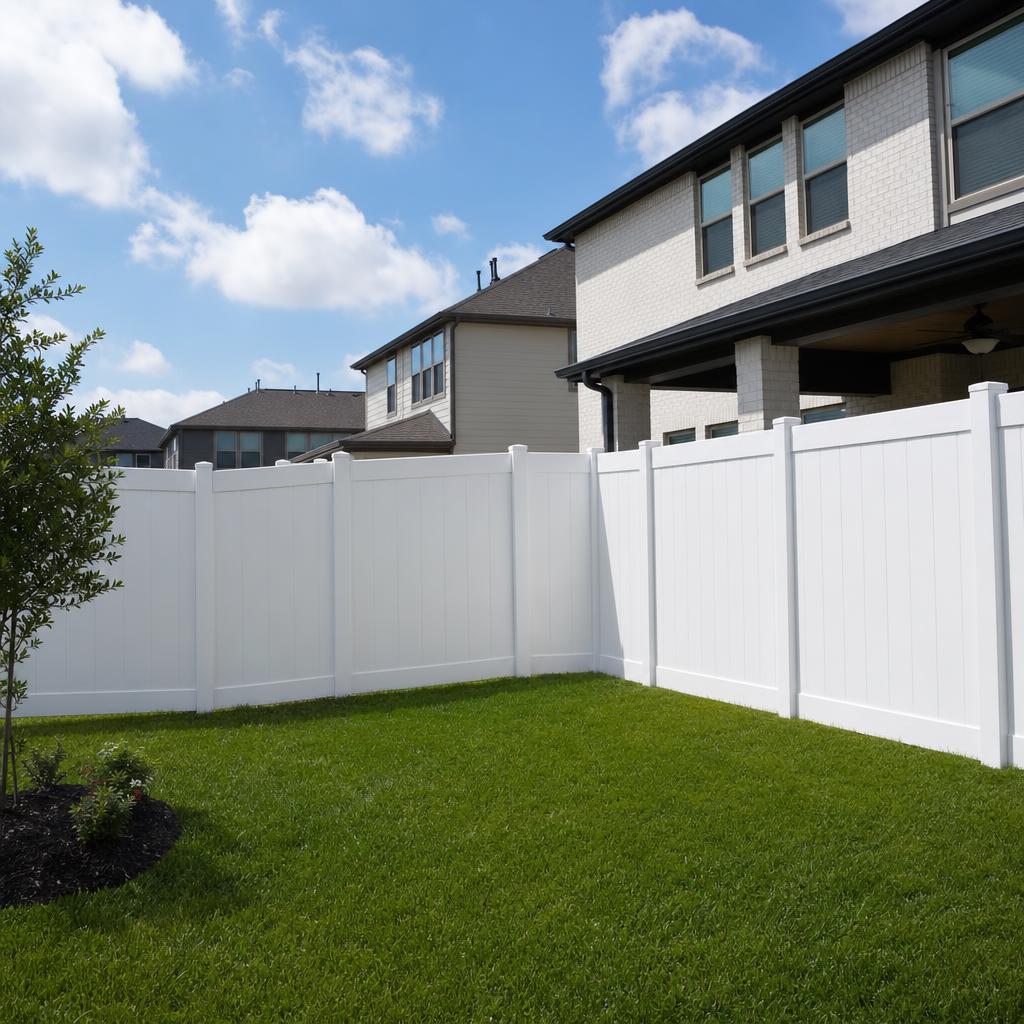
What Is Vinyl Fencing?
Vinyl fencing is assembled from PVC or similar vinyl components, including hollow or reinforced posts, rails, pickets, and routed panels. Privacy systems use interlocking boards or panel sections; picket and ranch-style profiles provide a more open boundary where offered. White is common, with selected manufacturers offering additional colors and textures. The finished surface gives the material a consistent appearance and generally removes the need for recurring paint or stain, while still requiring cleaning and inspection. Vinyl is not impervious to fading, cracking, warping, impact, or thermal movement; the selected product and its installation instructions matter.
Is Vinyl Fencing a Good Fit for Houston?
Houston’s UV exposure, heat, humidity, heavy rainfall, and wind events make panel spacing, post layout, drainage, and product specifications important. Vinyl expands and contracts with temperature, so installers must follow the manufacturer’s allowances rather than fastening panels as if they were rigid wood. A solid privacy fence also presents wind load. Surface mildew or dirt can develop in humid conditions and can generally be addressed with suitable cleaning. Avoid assuming every product performs identically in the Texas sun; ask about UV guidance and warranty terms.
Advantages of Vinyl Fencing
Things to Consider
Vinyl vs Composite vs Wood
| Factor | Vinyl | Composite | Wood |
|---|---|---|---|
| Appearance | Consistent manufactured profiles | Wood-look manufactured options | Natural grain and finish variation |
| Maintenance | Cleaning and inspections; generally no recurring paint or stain | Usually no recurring stain, paint, or seal; follow product guidance | Cleaning, repairs, and finish care vary by exposure |
| Initial cost | Often premium compared with basic wood | Often higher initial investment | Ranges widely by species and construction |
| Privacy | Many solid interlocking panel styles | Many full-panel styles | Flexible solid and semi-solid layouts |
| Impact and repair | Component replacement depends on product | Depends on panel and system | Individual boards are often replaceable |
| Heat movement | Spacing and system details are important | Product framing and expansion details matter | Wood moves with moisture and weather |
| Finishing | Manufactured surface; generally no recurring paint or stain | Manufactured surface; follow product directions | May need stain, paint, or sealer based on goals and condition |
Vinyl Fence Styles and Configurations
Vinyl may be available as full privacy panels, semi-privacy layouts, picket fencing, post-and-rail or ranch profiles, and decorative lattice or cap options. Color, texture, rail configuration, and panel height vary by manufacturer. Confirm that a desired style is offered for the selected system, and plan gates as engineered assemblies with reinforced posts, hinges, and latches rather than simply cutting a panel.
What Affects Vinyl Fence Pricing in Houston?
Vinyl pricing depends on linear footage, height, panel style, color or texture, post and rail system, wind exposure, corners, gates, gate reinforcement and hardware, removal, terrain, access, utilities, and installation complexity. Premium profiles, lattice or decorative details, and unusual transitions add scope. Product quality, warranty, replacement availability, and manufacturer requirements are meaningful cost factors. Do not treat a premium category as a precise quote.
Vinyl Fence Installation Considerations
Layout should account for property lines, corners, grade, post spacing, panel dimensions, expansion, and wind exposure. Posts need foundations appropriate to the system and soil; solid privacy runs may require particular reinforcement. Rails and panels must be assembled with the clearances specified by the manufacturer. Gate posts, reinforcement, hinges, latches, and operators should be planned together. Avoid drilling or fastening in ways that prevent normal thermal movement.
How Much Maintenance Does Vinyl Fencing Need?
Rinse or wash dirt, pollen, mildew, and surface buildup with methods approved for the product. Inspect posts, rails, caps, gates, hardware, and panels for impact damage, movement, cracks, discoloration, and drainage problems. Do not use a coating or abrasive cleaner without checking manufacturer guidance. Vinyl generally avoids recurring paint or stain, but cleaning and occasional repair remain part of ownership.
How Long Does Vinyl Fencing Last?
Vinyl systems are selected for long service and high moisture resistance, but actual longevity depends on product formulation, UV exposure, heat, wind, impact, installation, post foundations, cleaning, and manufacturer requirements. Some systems may remain in service for many years, yet a numeric range is not a guarantee. Keep warranty documentation and identify whether replacement panels remain available for the chosen product.
Who Is Vinyl Fencing Best For?
Vinyl fits buyers who want a consistent privacy or boundary appearance, high moisture resistance, and generally no recurring paint or stain. It can be attractive for homeowners who prefer straightforward washing over wood finishing and who accept a manufactured look.
When Another Material May Fit Better
Wood may suit a buyer who wants natural grain, easy field modification, or lower basic material cost. Composite or another material may be preferable where a specific texture, impact behavior, or structural system is required. Discuss alternatives where severe impact, unusual wind exposure, or extreme grade makes panel movement a concern.
What Do I Need for a Vinyl Fence Quote?
- Property address, approximate footage, height, grade, and exposure to wind
- Panel style: privacy, semi-privacy, picket, ranch/rail, lattice, color, and texture
- Gate count, opening widths, swing, reinforcement, latch, and automation
- Corners, transitions, masonry connections, existing fence removal, and access
- Photos, HOA requirements, product preference, and desired timeline
- Whether a specific manufacturer warranty or replacement-panel availability matters
Choose a vinyl system that fits your property
Share your preferred panel style, color, gate dimensions, footage, and site photos so the estimate accounts for posts, spacing, access, and wind exposure.
Frequently Asked Questions
Does vinyl fencing fade?
Some products are formulated with UV resistance, but gradual color change can occur and performance varies by manufacturer and color. Review the specific product’s UV guidance and warranty rather than assuming every vinyl fence is fade-proof.
Can vinyl warp in Texas heat?
Vinyl can move or distort when exposed to heat, load, or improper support. Correct spacing, post layout, rails, and manufacturer-compliant installation reduce risk; no material should be described as unable to warp.
Does vinyl need painting?
Most vinyl fence systems are manufactured with a finished surface and generally do not require recurring painting or staining. They still need cleaning, inspection, and any product-specific care.
Is vinyl better than composite?
They have different appearances, product systems, cost factors, repair options, and heat behavior. Vinyl often emphasizes a consistent finished profile, while composite may offer wood-look surfaces. Compare the exact products and installation requirements.
Can damaged vinyl panels be replaced?
Often, an individual panel, rail, or picket can be replaced, but access and color matching depend on the system and whether the product remains available. Keep the manufacturer and product information.
Is vinyl good for privacy?
Many vinyl systems are specifically designed for solid or semi-private screening. Privacy depends on panel height, layout, gaps, gate design, wind exposure, and local requirements.
How do you clean vinyl fencing?
Use water and a product-compatible cleaning method to remove dirt and surface buildup. Follow the manufacturer’s guidance, especially for mildew, pressure washing, detergents, and abrasive tools.
How long does vinyl fencing last?
Service life varies by product quality, UV and heat exposure, wind, impact, installation, maintenance, and manufacturer specifications. It can remain in service for many years, but published ranges are estimates rather than guarantees.