
Composite Fencing in Houston, TX
Composite fencing offers a wood-like appearance with lower maintenance than traditional wood. For Houston properties, the right composite system depends on fence height, product design, framing, installation requirements, sun exposure, property access, gate configuration, and the manufacturer's installation specifications.
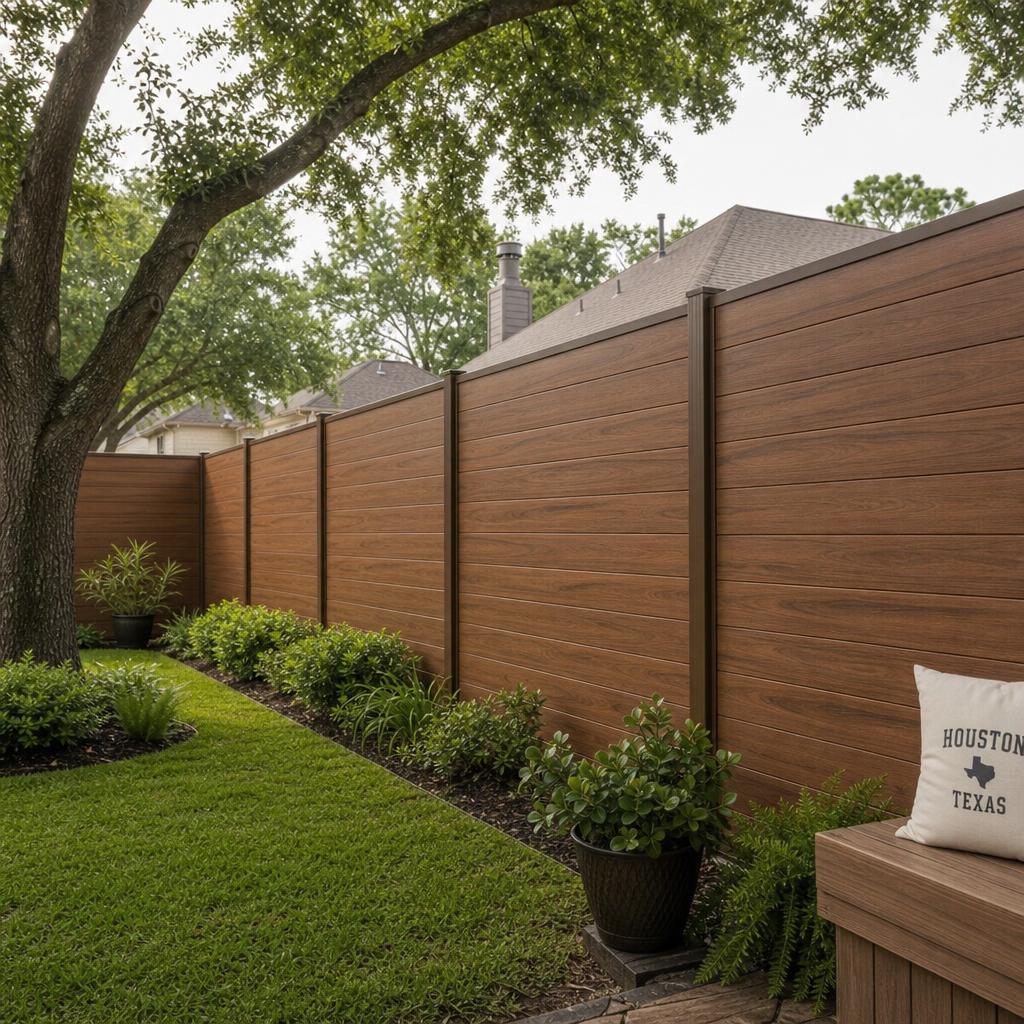
What Is Composite Fencing?
Many composite fencing products combine wood fibers and polymers to create a manufactured board or panel. This construction is designed to deliver a wood-like appearance with lower recurring finishing requirements than many natural wood fences.
Some products use alternative composite formulations or specialized outer caps to enhance weather resistance. Because it is a manufactured material, composite fencing offers a highly consistent appearance from panel to panel, making it a popular choice for modern, uniform privacy perimeters.
Is Composite Fencing a Good Fit for Houston?
Houston’s intense summer heat, strong UV exposure, and high humidity create a demanding environment for any outdoor structure. Composite fencing can perform well in these conditions because it does not require the recurring staining or painting that natural wood needs to resist moisture and insect damage.
Composite can still be affected by outdoor conditions. Long-term performance in Houston depends on several factors:
- Expansion and Contraction: Manufactured materials expand and contract with temperature changes. Installation should follow the product's expansion and spacing requirements to reduce the risk of warping or buckling.
- Sun Exposure: While many composite products are UV-stabilized, performance and color retention depend on the specific product design and color choice.
- Structural Support: Composite boards can be heavier and more flexible than wood. Post placement, framing, and drainage around posts should follow the selected system's requirements.
Long-term performance depends heavily on selecting the right product system and following the manufacturer's requirements for spacing, framing, support, and installation.
Advantages of Composite Fencing
Things to Consider Before Choosing Composite
Composite vs. Wood vs. Vinyl Fencing
| Factor | Composite | Wood | Vinyl |
|---|---|---|---|
| Initial Cost | Higher | Lower to Mid | Mid to Higher |
| Wood-Look Appearance | High | Natural | Varies |
| Recurring Staining | Typically No | Often | No |
| Rot Resistance | High | Product/species dependent | High |
| Insect Resistance | High | Product/species dependent | High |
| Maintenance | Low | Moderate to High | Low |
| Privacy Options | Strong | Strong | Strong |
| Product Variation | Brand/system dependent | Species/style dependent | System dependent |
Composite may appeal to someone who wants a wood-like appearance with less recurring finishing.
Wood may make more sense where a natural material is preferred, lower initial material cost matters, or custom on-site construction is desired. Compare the existing cedar fencing guide and pressure-treated pine guide.
Vinyl may make sense where low maintenance, a highly consistent manufactured appearance, or specific interlocking panel systems are priorities. Review the vinyl fencing guide for that alternative.
Composite Fence Styles
Composite materials can support several design approaches, though available styles depend on the manufacturer, selected system, and the participating provider's capabilities. Common configurations include:
- Full Privacy: Interlocking boards or seamless panels that block sightlines completely.
- Horizontal: Modern layouts featuring horizontal composite boards.
- Vertical: Traditional upright board orientations.
- Modern Panel Systems: Pre-engineered modular panels designed for clean, architectural lines.
- Mixed-Material Designs: Composite boards paired with ornamental iron or powder-coated steel framing for a durable, contemporary look.
What Affects Composite Fence Pricing in Houston?
Every composite project is unique. When you request a quote, participating contractors price the installation based on multiple factors:
- Total linear footage
- Desired fence height
- Selected composite product, brand, or system
- Specific color and texture style
- Post and frame system requirements
- Number of gates and gate widths
- Number of corners and directional changes
- Material availability
- Demolition and removal of existing fencing
- Property access for equipment and materials
- Terrain and grade changes along the fence line
- Utility locations and dig difficulty
- Permit and HOA compliance requirements
- Debris disposal fees
- Overall installation difficulty
Composite Fence Installation Considerations
Unlike natural wood, which can be cut and modified on-site with standard practices, composite systems require careful planning. Installation should follow the selected manufacturer's requirements for long-term stability.
Practical installation factors include:
- Post Spacing and Type: Some composite systems require closer post spacing or specific post types to provide adequate support.
- Expansion Allowances: Spacing should follow the manufacturer's requirements for heat expansion and contraction.
- Framing and Support: The weight and flexibility of the selected boards may require system-specific framing or reinforced rails.
- Gate Reinforcement: Gate weight and width may call for a dedicated frame or anti-sag reinforcement.
- Site Conditions: Property grade, drainage patterns, property lines, and utility locations dictate how the bottom rail or panels sit above ground.
- HOA Requirements: If applicable, the design should align with neighborhood restrictions regarding color, height, and material.
How Much Maintenance Does Composite Fencing Need?
Composite is generally low maintenance compared with unfinished or regularly stained natural wood, but periodic care is still needed.
Typical care to keep a composite fence looking and performing its best may include:
- Periodic washing to remove surface dirt and debris.
- Cleaning organic buildup (like mildew or algae) where needed, especially in shaded or humid areas of the yard.
- Inspecting gates, hinges, and latches for proper alignment.
- Checking structural posts and framing for stability.
- Using only manufacturer-approved cleaning methods and solutions to avoid damaging the surface finish.
How Long Does Composite Fencing Last?
Composite fencing is commonly selected for long service life, but actual lifespan varies significantly based on:
- The specific product line and manufacturer
- Installation quality
- Intensity of UV and sun exposure
- Moisture levels and drainage
- Structural support integrity
- Routine maintenance
- Avoidance of physical damage
Warranties vary by product and manufacturer. Review the specific warranty documentation for the composite system you select.
Who Is Composite Fencing Best For?
"Composite can be a good fit for Houston homeowners who want a wood-like privacy fence with lower recurring maintenance and are comfortable with a higher initial material cost."
It is often a strong choice if your priorities include:
- Full-panel privacy
- Achieving a low maintenance yard
- Enjoying a wood-like aesthetic without the need for recurring staining
- Securing a modern, consistent design
- Investing in long-term property improvements
Composite may NOT be the best fit for someone primarily focused on:
- Finding the lowest initial installation cost
- The authenticity of natural wood construction
- Having the ability to make very simple, improvised field repairs
- Maximum local product availability for replacement components
What Do I Need for a Composite Fence Quote?
To help participating Houston contractors provide accurate pricing information, gather as much of the following as possible. An approximate request is completely okay—perfect measurements are not required to start the conversation.
- Property address
- Approximate linear footage
- Desired fence height
- Number of gates
- Preferred style & color
- Existing fence removal
- Property photos, if available
- HOA requirements
- Access considerations
- Project timeline
Ready to Price a Composite Fence?
Share the approximate fence length, height, gate count, style preferences, property location, and project timing so your request can be matched with an appropriate participating fencing provider in the Houston area.
Frequently Asked Questions
Is composite fencing worth it in Houston?
Composite can be a good fit for Houston homeowners who expect to own the property long-term and want less recurring maintenance than many wood systems. Whether the higher initial cost is worthwhile depends on the selected product, installation requirements, maintenance priorities, and how long the fence will remain in service.
Does composite fencing fade in the Texas sun?
Many modern composite systems have UV-resistant caps or coatings designed to minimize fading. However, some gradual weathering can occur. Fading resistance depends entirely on the specific product line and manufacturer.
Can composite fencing warp in Houston heat?
Proper spacing, framing, and support can reduce the risk of heat-related movement or distortion. Installation should follow the selected manufacturer's requirements.
Is composite fencing more expensive than wood?
Composite often has a higher initial cost than many common wood fence systems, though pricing varies by product, design, framing requirements, and installation. Long-term cost comparisons depend on the selected systems and the recurring finishing or maintenance each option requires.
Does composite fencing need to be stained or painted?
Most composite fencing is manufactured with a finished surface and typically does not require recurring staining, painting, or sealing. Care requirements should still be confirmed for the selected product.
How long does composite fencing last?
Composite fencing is commonly selected for long service life, but actual lifespan depends on the product system, installation, climate exposure, maintenance, and manufacturer specifications. Warranties vary by product and manufacturer.
Is composite good for a privacy fence?
Many composite systems are designed for full-panel privacy applications. The amount of screening depends on the board profile, panel design, spacing, gate layout, and installation details.
Can an old wood fence be replaced with composite?
An existing wood fence can often be replaced with composite, but the new system may require different post spacing, framing, or foundations. Existing posts should be evaluated rather than assumed to be reusable.
Does composite fencing contain recycled materials?
Some composite products incorporate recycled plastics and wood fibers, but not all. Check the specific manufacturer's specifications if recycled content is a priority for your project.