
Ornamental Iron / Steel Fencing in Houston, TX
Ornamental steel fencing provides a strong, open, high-end appearance for boundaries, entries, and security areas. It offers visibility rather than privacy, and its long-term performance depends on sound fabrication, corrosion protection, and finish care in Houston’s humid climate.
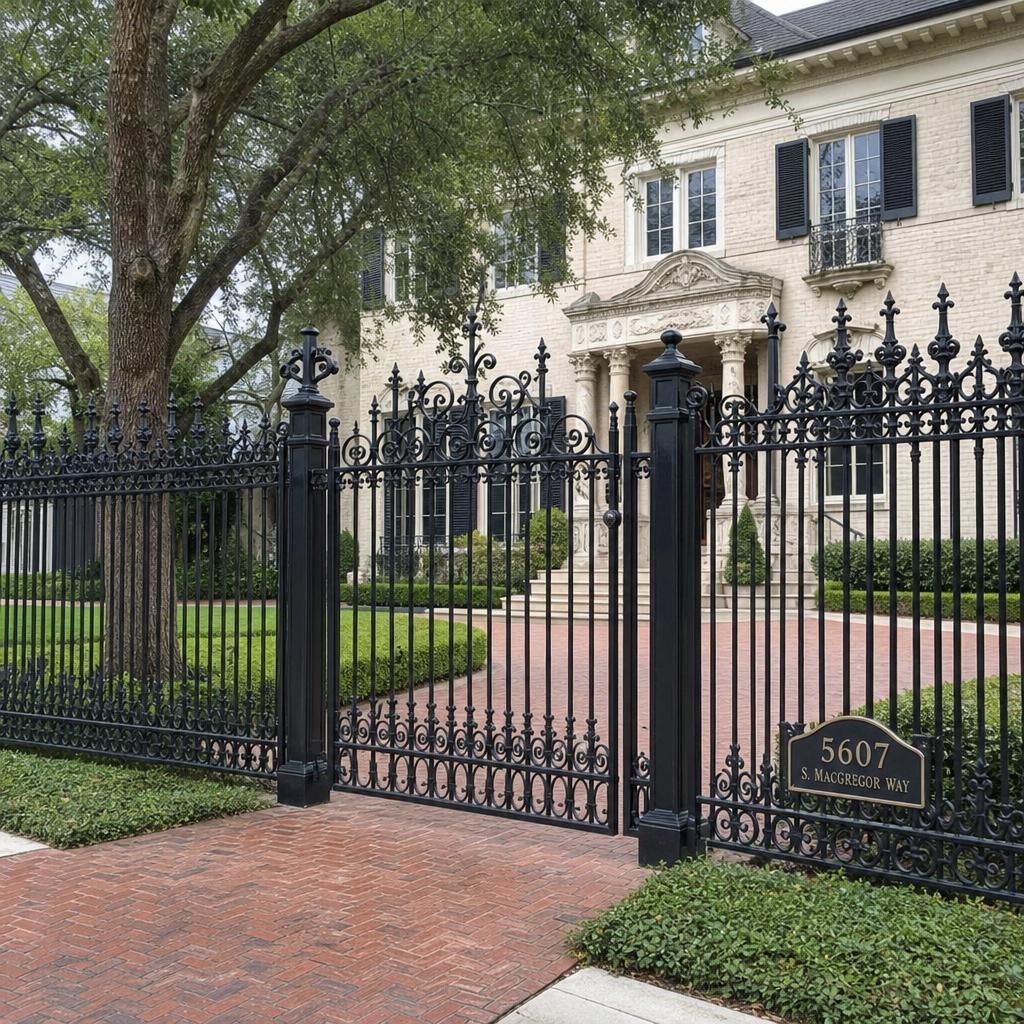
What Is Ornamental Iron / Steel Fencing?
The phrase ornamental iron is commonly used for decorative metal fencing, but many current systems are fabricated or welded steel rather than traditional wrought iron. Wrought iron is a historically distinct forged material; modern ornamental steel may use posts, rails, welded panels, and decorative pickets made to a repeatable specification. That distinction matters when comparing weight, fabrication, coating, repair, and price. A steel system can be panelized or custom-built, with gates designed around the opening and expected use. Open pickets create an architectural edge and preserve visibility, but they do not provide the screening of a privacy fence.
Is Ornamental Iron / Steel Fencing a Good Fit for Houston?
Houston heat, humidity, heavy rain, and occasional standing moisture make the finish and drainage details important. A properly prepared and coated surface slows corrosion, but a coating is not an absolute barrier: scratches, cut edges, weld areas, and trapped moisture deserve inspection. Posts need foundations suited to the soil and grade, while sloped property may require stepped panels, rackable panels, or custom fabrication. Pool installations must satisfy applicable code and local safety requirements; the fence design alone does not establish compliance.
Advantages of Ornamental Iron / Steel Fencing
Things to Consider
Ornamental Steel vs Aluminum vs Iron/Wood Combination
| Factor | Ornamental steel | Aluminum | Iron/wood combination |
|---|---|---|---|
| Strength and weight | Heavier, substantial construction | Lighter and easier to handle | Steel frame with wood infill; design-dependent |
| Corrosion | Coating damage can expose steel | Generally less prone to ferrous rust, but finish still matters | Steel frame needs protection; wood has separate moisture concerns |
| Privacy | Open visibility | Open visibility | Wood infill can provide meaningful screening |
| Custom fabrication | Strong fit for welded and decorative work | Good for many profiles; fabrication differs by system | Custom frame and board layout require coordinated work |
| Upkeep | Finish inspection and touch-up | Cleaning and finish inspection | Metal and wood require separate care |
| Cost drivers | Gauge, coating, details, gates, fabrication | Profile, grade, gates, and finish | Frame, infill species, finish, and gate weight |
Ornamental Iron / Steel Fence Styles and Configurations
Common configurations include two-rail or three-rail picket panels, spear-top or flat-top profiles, decorative finials, arched sections, pedestrian gates, and driveway gates. Select spacing and height around the desired balance of visibility, containment, and code requirements. On a slope, the installer may use stepped sections, rackable panels, or custom sections; the best choice depends on the grade and appearance desired.
What Affects Ornamental Iron / Steel Fence Pricing in Houston?
Ornamental steel pricing is affected by linear footage, height, steel profile and gauge, panel versus welded construction, decorative details, post spacing, corners, slope, pedestrian or driveway gates, hinge and latch hardware, access equipment, demolition, utilities, site access, and the level of corrosion protection. Custom welding and a large or automated gate can materially change scope. HOA or permit requirements may also affect design. A category such as premium is not a project price; an on-site scope is needed.
Ornamental Iron / Steel Fence Installation Considerations
Installation starts with layout, property lines, utilities, grade, and post foundations. Steel posts and gate posts need appropriate spacing and footing for the selected system and gate loads. Welded assemblies should be protected during handling, and panel systems need correct rackability or stepped layout on slopes. Ask how cut edges, welds, fasteners, and field touch-ups will receive corrosion protection. Gate alignment, hinge capacity, latch position, and operator compatibility should be planned before concrete is placed.
How Much Maintenance Does Ornamental Iron / Steel Fencing Need?
Rinse or clean accumulated dirt and salt-like residue, then inspect the coating for chips, scratches, bubbling, rust staining, loose hardware, and water-trapping conditions. Touch-up products should be compatible with the existing paint or powder-coat system; follow the coating manufacturer’s preparation instructions. Keep vegetation from rubbing the finish and address damaged areas before corrosion spreads. Maintenance timing depends on exposure, finish, impact, drainage, and the selected product rather than a universal calendar.
How Long Does Ornamental Iron / Steel Fencing Last?
A well-installed ornamental steel fence may remain in service for many years, but no single lifespan is a guarantee. Steel grade, weld quality, post foundations, coating preparation, Houston moisture and UV exposure, impact, drainage, and timely touch-up all influence service life. Ask for the product and coating specifications, warranty terms, and the maintenance expected for the exact system.
Who Is Ornamental Iron / Steel Fencing Best For?
This material fits owners who value an architectural open fence, visible boundaries, durable-feeling steel construction, decorative gates, or custom fabrication. It can suit front boundaries, pool areas where code-compliant, estate-style entries, and security perimeters where visibility is useful.
When Another Material May Fit Better
Another material may be more appropriate when full privacy, the lightest possible panels, very low finish involvement, or a lower initial budget is the priority. If the property is highly exposed to impacts or standing moisture, discuss finish and design details before selecting steel.
What Do I Need for a Ornamental Iron / Steel Fence Quote?
- Property address and approximate linear footage
- Desired height, picket spacing, profile, top detail, and finish color
- Pedestrian and driveway gate widths, swing direction, hardware, and automation needs
- Slope, retaining walls, masonry connections, access limits, and existing fence removal
- Pool or HOA requirements, photos, utility information, and target timeline
- Whether welded custom fabrication or a panelized system is preferred
Plan an ornamental steel fence around your property
Share your desired profile, gates, grade, finish, and photos so the scope reflects the fabrication and corrosion-protection details that affect this material.
Frequently Asked Questions
Is ornamental iron the same as wrought iron?
Not necessarily. Traditional wrought iron is a historically distinct forged material. Many current ornamental fences marketed as iron use welded or fabricated steel panels, posts, and pickets. Confirm the actual material and fabrication method in the proposal.
Does ornamental steel rust?
Exposed steel can rust if its coating is damaged, poorly prepared, or exposed to trapped moisture. Proper preparation, coating, drainage, inspection, and compatible touch-up reduce that risk but do not make steel immune to corrosion.
Is steel stronger than aluminum fencing?
Steel is generally heavier and more substantial, while aluminum is lighter and often easier to handle. Strength depends on the profile, thickness, joins, foundations, and gate design, so compare complete systems rather than material names alone.
Can ornamental steel provide privacy?
Typical picket ornamental steel provides visibility, not full privacy. Screening would require a different infill or a mixed-material design, which changes appearance, wind exposure, and maintenance.
Is ornamental steel good for security?
It can be a strong choice for visible boundaries when posts, foundations, picket spacing, and gates are properly designed. Security also depends on hinges, latches, access controls, and the complete site layout.
Can it be used around a pool?
It may be used where the design meets applicable pool-barrier codes and local requirements. Height, openings, gates, self-closing hardware, and latches must be evaluated for the specific installation.
How is the finish maintained?
Clean the surface, inspect for chips and rust staining, and repair damaged areas with a compatible system. Timing depends on exposure, coating, impact, and drainage rather than a fixed schedule.
How long can ornamental steel last?
Service life varies by product, coating, installation, climate exposure, physical damage, and maintenance. A qualified installer can explain the expected care and warranty for the selected system without treating an estimate as a promise.