
Chain-Link Fencing in Houston, TX
Chain-link fencing is a practical, value-oriented choice for pets, play areas, back-property lines, and utility or commercial perimeters. The right Houston system depends on wire gauge, mesh, coating, height, posts, gates, and the level of screening you need. It is economical and repairable, but open mesh provides limited privacy without an added screen or slat system.
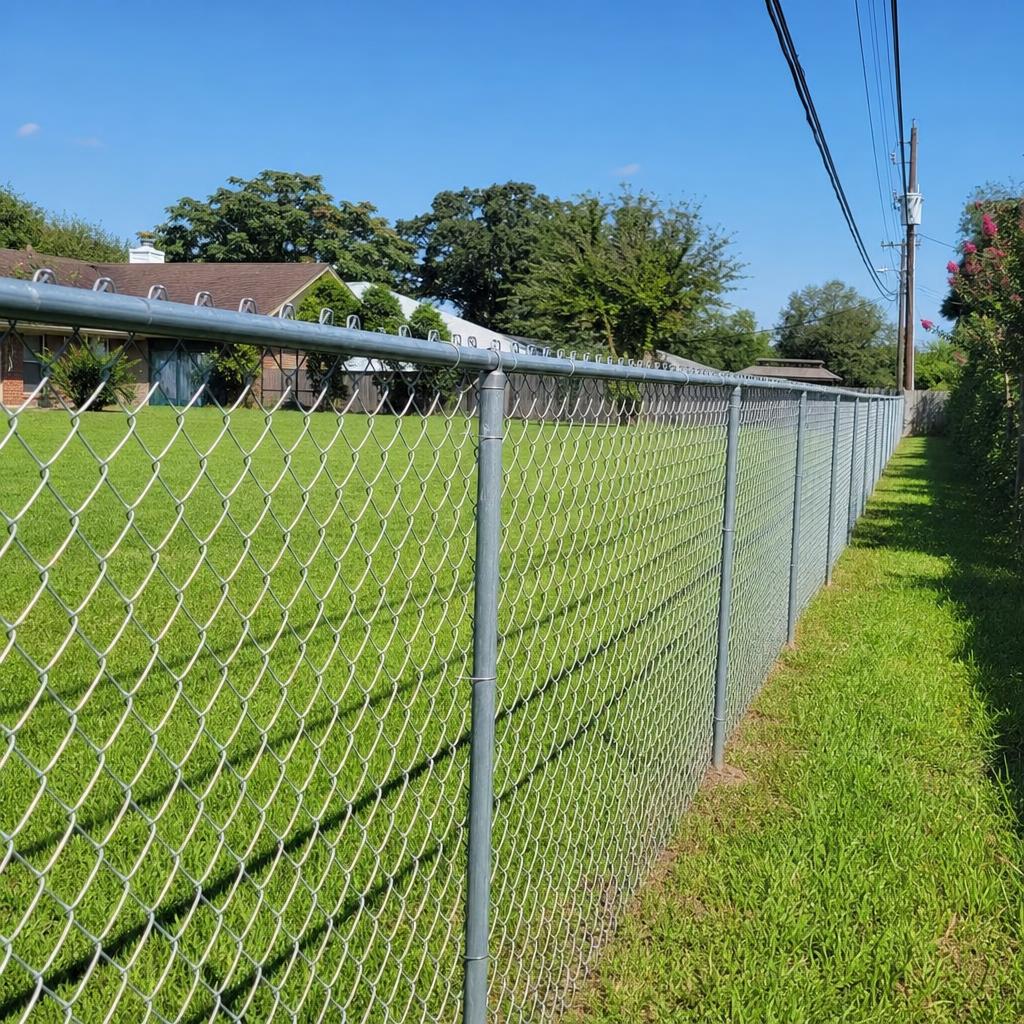
What Is Chain-Link Fencing?
Chain link is woven wire mesh attached to terminal posts, line posts, fittings, and commonly a top rail. Galvanized mesh uses a zinc coating to help protect steel from corrosion; vinyl-coated mesh adds a polymer finish over the wire and is available in colors such as black or green. Gauge describes wire thickness: a lower gauge generally indicates thicker wire, but the complete system still includes mesh size, framework, fittings, and gate construction. A quote should identify these details rather than saying only “chain link.”
- Terminal posts anchor corners, ends, and gate openings; line posts support the intermediate run.
- Tension bars, bands, and wire or rail keep the mesh supported and properly tensioned.
- Height, mesh opening, gauge, coating, and gate width should be selected for the actual use.
Is Chain Link a Good Fit for Houston?
Houston heat, intense sun, humidity, heavy rain, and occasional storm winds make coating condition and sound post installation important. Proper drainage around posts, secure concrete footings, and correctly tensioned mesh help the fence handle ordinary movement and use; they do not remove every storm or impact risk. Galvanized and vinyl-coated options can both be appropriate, but a scratched coating, standing moisture, incompatible hardware, or neglected gate can create a path for corrosion. On exposed lots, the open mesh allows air through more readily than a solid screen, while privacy slats change that wind and maintenance profile.
- Check drainage, easements, utilities, and grade before setting posts.
- Ask whether the selected coating and fittings suit the location and expected exposure.
- Confirm HOA, pool-barrier, and local requirements where they apply.
Advantages of Chain Link Fencing
Things to Consider
Chain Link vs. Wood vs. Aluminum
| Factor | Chain Link | Wood | Aluminum |
|---|---|---|---|
| Initial cost | Often value-oriented | Low to premium by species and style | Mid-premium to premium |
| Privacy | Limited unless screened | Strong in privacy layouts | Usually open picket |
| Visibility | High with open mesh | Low in solid designs | High |
| Pets | Practical containment options | Strong privacy and containment | Useful where open sightlines fit |
| Maintenance | Inspect coating, tension, and hardware | Finish and board care required | Cleaning and finish inspection |
| Repairability | Mesh, fittings, and posts can be targeted | Boards and rails can be replaced | Panels and parts may be system-specific |
| Appearance | Utilitarian to softened with coating | Natural and customizable | Ornamental and consistent |
Chain link suits buyers prioritizing practical containment, airflow, visibility, and budget. Wood offers more privacy and a warmer appearance, while aluminum favors decorative open sightlines and corrosion resistance. Actual scope and product grade should be compared, not just material names.
Chain-Link Styles and Configurations
Choose galvanized mesh for a straightforward functional perimeter or vinyl-coated mesh when color and a less industrial appearance matter. Residential runs commonly use moderate heights and smaller pedestrian or driveway gates; taller or heavier systems may be appropriate for commercial, utility, or specialized containment needs. Privacy slats, woven screens, or landscaping can reduce sightlines, but screening is not equivalent to a solid privacy wall. Sloped ground may use a stepped layout or a contour approach depending on grade and the selected mesh.
- Galvanized, black-coated, or green-coated mesh
- Privacy slats or windscreen where the framework supports the added load
- Walk gates, double-drive gates, and service-access openings
What Affects Chain-Link Fence Pricing in Houston?
Pricing depends on linear footage, height, wire gauge, mesh opening, galvanized versus vinyl-coated finish, post and rail size, terminal-post count, gates and gate width, privacy additions, corners, removal, access, grade, utilities, and installation complexity. Commercial or higher-security specifications can add heavier framework, tighter mesh, specialized fittings, or additional access control. Disposal, HOA or permit considerations, and the material selected for a shared boundary may also change the scope. There is no responsible universal price per foot without these inputs.
Chain-Link Fence Installation Considerations
Installation starts with locating the property line, utilities, easements, and gate openings. Posts must be laid out for corners, ends, gates, and the intermediate line; the installer then sets the framework, attaches mesh, and tensions it so it is supported without being distorted. A good scope identifies gauge, mesh, coating, top rail, tension wire where used, fittings, post treatment, and gate hardware. On a slope, ask how the run will transition and whether privacy screening changes the structural requirements. Installation should reflect the selected system and site conditions rather than an assumed generic chain-link detail.
How Much Maintenance Does Chain Link Need?
Chain link is generally low maintenance, but periodic care is still needed. Rinse or clean dirt and organic buildup as needed, keep vegetation from holding moisture against the mesh, and inspect after severe weather. Look for broken ties, loose tension, bent posts, damaged coating, sagging gates, and worn hinges or latches. Touch-up products should be compatible with the coating, and heavily corroded mesh or structural posts may call for replacement. Privacy slats and screens need their own inspection for dirt, fading, and wind damage.
How Long Does Chain-Link Fencing Last?
Chain-link systems are commonly selected for long service, but lifespan varies by wire gauge, coating, fittings, soil and drainage, installation quality, weather exposure, physical damage, and maintenance. A protected finish and sound posts can help the system remain serviceable for many years; cut, bent, or corroded components shorten that outlook. Treat any range as an estimate for a particular system, not a guarantee across every chain-link fence.
Who Is Chain-Link Fencing Best For?
Chain link can fit a homeowner, landlord, utility user, or business that values practical containment, visibility, airflow, straightforward repairs, and a value-oriented scope. It is often a sensible starting point for dogs, play areas, rear boundaries, and service yards. Consider wood, composite, vinyl, or a screened system when privacy and a finished architectural appearance matter more than open visibility. Consider ornamental metal or a purpose-designed security system when the site's security requirements exceed a conventional residential fence.
What Do I Need for a Chain-Link Fence Quote?
- Property address, approximate linear footage, desired height, and any grade changes.
- Galvanized or vinyl-coated finish, preferred color, gauge, mesh opening, and privacy slats or screen.
- Number, width, and use of walk or driveway gates, including lock or access-control needs.
- Existing fence removal, property photos, access constraints, utilities, and known HOA requirements.
- Desired timeline and whether the fence serves pets, children, a pool, a commercial area, or a utility line.
Ready to price Chain Link fencing?
Share the property, layout, gates, finish preferences, and site conditions so participating providers can evaluate the request.
Frequently Asked Questions
What chain-link gauge should I choose?
Lower-gauge wire is generally thicker, but the right choice depends on height, mesh opening, use, gate demands, exposure, and budget. Ask for the exact gauge and framework in the quote rather than selecting by gauge alone.
Is galvanized or vinyl-coated chain link better?
Both can be appropriate. Galvanized is a straightforward protective finish; vinyl coating adds color and another surface layer. Selection depends on appearance, exposure, coating quality, fittings, and the way the system will be used.
Can chain link provide privacy?
Open mesh provides limited privacy. Slats, windscreens, or landscaping can reduce sightlines, but they change appearance, maintenance, and wind loading and should be included in the system design.
Is chain link good for dogs?
It can be practical for dog containment when height, mesh opening, gate latches, bottom clearance, and the animal's behavior are addressed. No fence design replaces supervision or guarantees containment for every dog.
Does chain link rust?
The steel can corrode when protective coating is damaged or the system stays wet. Galvanized and vinyl-coated finishes help protect it, while compatible repairs, drainage, and inspections help identify damage early.
Can chain link follow uneven ground?
Often, but the installer may need a stepped layout, contouring, grading, or custom transitions. The appropriate approach depends on slope, mesh, property line, and desired bottom clearance.
How tall can chain-link fencing be?
Available heights vary by product, use, local requirements, and the installation scope. Commercial, pool, and security applications can have different rules; confirm the needed height before ordering.
How long does chain-link fencing last?
It can remain in service for many years, but actual longevity varies with gauge, coating, posts, drainage, weather, damage, installation, and maintenance.