
Storm response guide
Fence Storm Damage: What Houston Homeowners Should Do First
Hurricane season and severe storms take a toll on Gulf Coast fences. Here is a practical checklist for handling storm damage.

The short answer
Protect people and pets first, document the condition before cleanup, and avoid pushing or pulling unstable sections. A repair professional can determine whether sound posts and rails can be retained.
When a storm damages your fence, a calm, methodical response protects your safety and your insurance claim.
Start with safety. Keep children and pets away from downed sections, watch for exposed nails and unstable posts, and never touch a fence in contact with a downed power line — call your utility.
Document everything. Photograph all damage from multiple angles before making repairs. Detailed photos support an insurance claim.
Secure the area. Temporarily brace leaning sections or close gaps to contain pets and maintain security until repairs happen.
Review your insurance. Coverage depends on your policy. Keep contractor estimates and documentation, but remember coverage decisions rest with your insurer.
Plan for resilience. When rebuilding, ask about steel posts set deeper in concrete, hurricane clips, and shadowbox designs that let wind pass through.
Submit a repair request and flag it as storm-related for faster routing to contractors who handle emergency fence work across Houston.
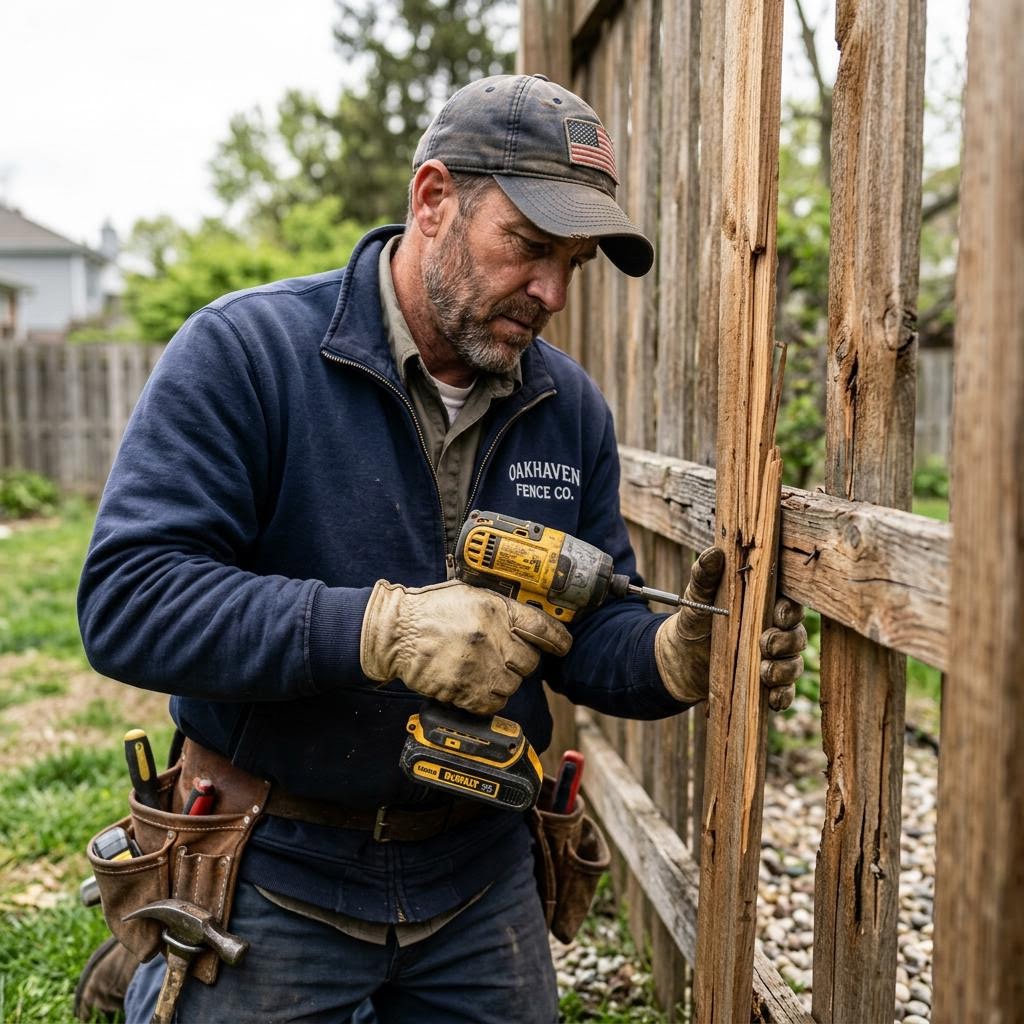
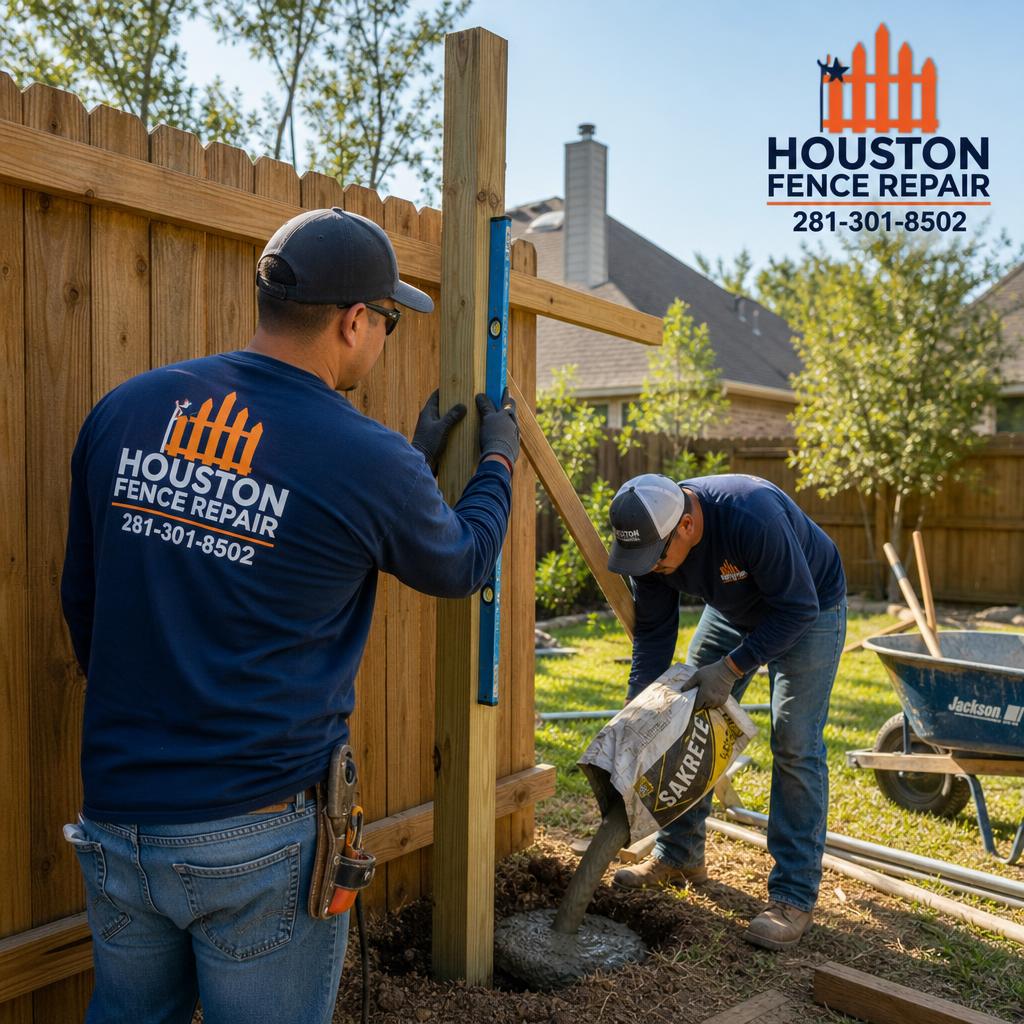
Step 1
Make the area safe
Keep away from leaning panels, sharp fasteners, broken gate hardware, and any fence touching a utility line. Do not attempt to move a section that could fall or that may be energized.
- Keep children and pets inside or use a safe temporary barrier.
- Contact the utility provider for any nearby downed line.
- Use temporary bracing only when it can be installed without entering the fall path.
Step 2
Document before cleanup
Take wide and close photos from safe angles. Capture failed posts, rails, panels, gates, nearby trees, and any secondary property damage. Coverage depends on the individual policy, so preserve records and ask the insurer what documentation it requires.
- Record the date and approximate time of the storm.
- Keep estimates, receipts, and insurer communications together.
- Avoid describing coverage as guaranteed until the insurer confirms it.
Step 3
Repair or replace?
Localized panel or picket damage may be repairable when posts and rails remain sound. Widespread leaning, broken posts, advanced rot, or a fence already near the end of its useful life can make replacement the more durable choice.
- Ask which structural components can safely remain.
- Compare a targeted repair with replacement of the affected run.
- Discuss post and panel choices appropriate for the site's exposure.
Keep planning
Next step
Ready to discuss your fence project?
Tell us what you are planning. We will use your project details to connect you with an independent Houston-area contractor who can provide an estimate.
Request repair matching